





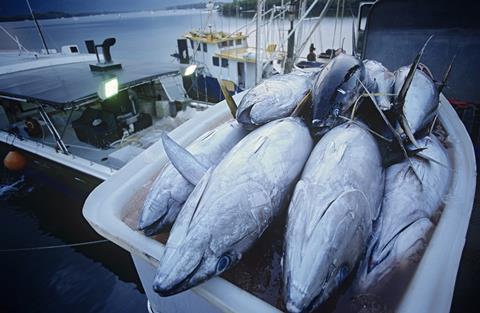
Campaigners against illegal, unreported and unregulated fishing (IUU) have celebrated new legislation that enhances scrutiny of UK seafood imports.
The Environmental Justice Foundation said the Sea Fisheries (Amendment and Transitional Provision) Regulations 2026, “closes the gap” between UK and EU policy and would strengthen the UK’s ability to prevent illegally caught fish from entering the country.
The regulations include enhanced catch certificates and updated import documentation, which the group said would document “who, what, where, when and how a seafood consignment was caught”, the group said.
The regulations also move towards digital processing for catch documentation and has updated the UK IUU Vessel List to prohibit imports from listed vessels.
Both measures were called for in the Coalition for Fisheries Transparency report ‘Criminal catches: how to stop the supply of illegal seafood to the UK’, which was published last year and found more than a quarter of the UK’s seafood imports were from countries which were “among the world’s most notorious offenders for illegal fishing”.
“The UK’s new catch certificate is a major step forward in the fight against IUU fishing, human rights abuses at sea, and the destruction of marine ecosystems,” said EJP global lead for transparency Amélie Giardini.
“The new requirements better enable the authorities to trace seafood back to its source and help keep illegally caught seafood off British plates,” she added. “By aligning with the EU, and digitising its system, the UK is making itself a far harder target for illegal operators, and this is a move worth celebrating.”
However, Giardini said the UK could further strengthen its import controls and take more steps to eradicate IUU fishing from the international seafood supply chain.
She said it could use methods including making its digitised system interoperable with the EU’s, introducing a “carding system” to warn and sanction countries failing to tackle IUU fishing, and increasing verification checks.
She also called on the government to “focus scrutiny on higher-risk consignments” and to “restore regular reporting requirements for IUU checks at the UK border”.
Sarah Champion, MP for Rotherham and chair of the International Development Select Committee, likewise said “there is more to do”.
“But I commend the government for moving towards implementing the Global Charter for Fisheries Transparency, and in particular Principle 7 on seafood traceability,” she added.
“These are reforms that colleagues and I have long campaigned for, and I am delighted to see them delivered,” she said. “Illegally caught fish should never be entering the UK. My constituents, and every consumer in the UK, deserve assurances that the seafood they are buying is legal, ethical and sustainable.”





No comments yet