






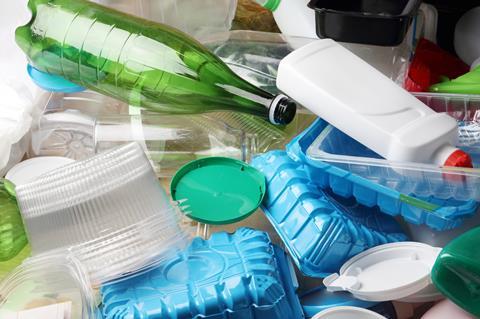
Supermarket bosses and suppliers have joined forces ahead of the budget to call for the crisis-hit packaging tax to be scrapped.
Last week The Grocer revealed the government had announced a major bailout of the packaging compliance fees system, after producers were left with soaring bills for a range of materials.
But with days to go before the crucial budget statement, industry bosses said the time had come for it to be canned altogether.
The four UK environmental regulators last week revealed large chunks of the money owed for packaging materials including plastic, steel and wood were to be written off, in a “one-off intervention” to the Packaging Recovery Note (PRN) system.
Speaking exclusively to The Grocer, retailers and producers welcomed Defra’s changes but called on the government to go further and phase out PRNs completely.
Under UK packaging waste laws, all producers with a turnover over £2m who handle more than 50 tonnes of packaging a year must buy plastic PRNs, or certificates that verify the waste has been recycled or reprocessed, in proportion to the amount of plastic packaging they put on the market.
However, since the beginning of this year, the changes have led to a major shortage in the availability of PRNs and rocketing costs. The pricetag associated with key materials such as plastic has in some cases more than trebled.
Trade associations representing the UK’s retailers and food and drink manufacturers have now proposed folding PRNs into the wider extended producer responsibility (EPR) scheme. They argue that the outdated system has placed unnecessary cost burdens on businesses and consumers, and taxes the same material several times over, while failing to tangibly improve the UK’s “flatlining” recycling rates.
BRC director of policy Tom Ironside said: “The UK has a complicated and outdated packaging tax system, with retailers and manufacturers coughing up billions of pounds in unnecessary taxes, with little tangible benefit.
“Defra has rightly taken the first step towards fixing the failing Packaging Waste Recovery Notes market, but we need more than a sticking plaster. Ministers must urgently set out how it will prevent a repeat of this market failure in 2027, and deliver the fundamental reforms that are long overdue.
“To simplify recycling and bring down costs, the government should scrap PRNs, bring them into the new extended producer responsibility system, and create a single, transparent system that works for businesses, consumers and the environment. It should also publish regular recycling data so everyone can see where their money is going.”
Under the bailout, bodies including the Environment Agency have said producers and compliance schemes that would normally be facing enforcement action would get a reprieve if they hit reduced targets for their 2026 PRN obligations.
For plastic the target is 83% of the original obligation, for wood it is 90% and for steel it is 92%.
But FDF director of growth and sustainability Balwinder Dhoot said the “failing” tax needed more than a “stopgap measure”.
“We’ve been saying PRNs need serious reform for a long time and the unexpected cost increases that producers have recently faced just reinforces our case,” he explained.
“We want to see government undertake a full review of the PRN system, and wider complex packaging policies businesses are dealing with. We’re ready to work with Defra on what a more stable, investment-driven alternative looks like to help drive up recycling rates and achieve the circular economy we all want. Without reform investment in a circular system will take a hit and businesses and households will continue to face unnecessary costs.”
British Soft Drinks Association director general Andy Bagnall added: “Defra’s intervention last week is a welcome start, but it will need to go further if the evidence shows there still aren’t enough Packaging Waste Recovery Notes available, forcing companies to buy them at sky-high prices. The government should then take a holistic look at the entire packaging policy landscape – ultimately scrapping PRNs, reassessing the effectiveness of the plastic packaging tax, and reforming extended producer responsibility to address the issue of hospitality effectively paying twice for packaging recycling.”









No comments yet